Tech-Land offers CNC machining for oil & gas industries. High-quality spare parts & custom solutions for MENA's demanding sectors like Pumps, Valves, Mechanical Seal and all spare parts that needs modern technology CNC machining. All you needs we can provide.


CNC Turbine Machining & Component Solutions
The term CNC turbine machining can be used to refer to the use of Computer Numerical Control machine tools to produce, repair, and refurbish turbine parts.
Tech-Land
3/30/20269 min read
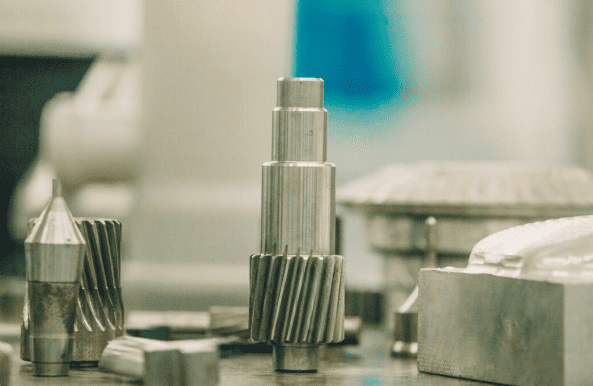
The turbines work in conditions that are most challenging in any industry. Temperatures and pressures can go beyond 600 o C and hundreds of bar inside a steam turbine in a power plant. Components within a gas turbine at an oil and gas plant will be rotated thousands of times a minute, an hour, a day, in day after day. In such environments, there is virtually no allowance of error in component production.
This is the main reason why CNC machining has emerged as the best way of producing and repairing turbine parts. It is a mix of computer-controlled precision, repeatable accuracy, and the possibility of operating with high-performance materials that makes CNC technology the only viable alternative when dealing with parts that must be able to perform at the upper temperature, pressure, and mechanical stress limits.
We are Tech-Land and we offer precision machining of turbines in CNC machines to clients in the UAE. Businesses in power generation, oil and gas, petrochemicals, aerospace and heavy manufacturing entities work with us- either to provide turbine components or repair and overhaul services or provide operators with a reliable technical partner in their critical rotating equipment.
What Is CNC Turbine Machining?
The term CNC turbine machining can be used to refer to the use of Computer Numerical Control machine tools to produce, repair, and refurbish turbine parts. The term encompasses a wide spectrum of operations - manufacture of individual blades and vanes to manufacture of complete rotor assemblies, shafts, housings and bearing surfaces.
The difference between CNC machining and conventional manufacturing techniques is that precision and consistency is provided. Turbine parts are characterized with very narrow dimensions. A blade with even a fraction of a profile out of place will interfere with airflow, decrease effectiveness, and even lead to vibration that will harm the surrounding parts. An unbalanced rotor machined to the wrong specifications will give trouble the instant the turbine reaches the speed ratio.
CNC machines act based on a programmed toolpath based on engineering drawings or 3D models and excavate the material with controlled, repeatable accuracy. The outcome is parts that are precisely to their specifications, batch after batch, with surface finishes and dimensional accuracy which conventional machining will never approach.
This is of supreme importance to the turbine users and the manufacturers. It implies that the replacement parts go in the first time. It implies that the revamped components do not simply get the machine going, but reestablish the functionality of the turbine. And it signifies that the turbine will be reliable enough to be put into service and work safely and efficiently throughout the duration of the service.
How Turbines Work
It is only after we get down into the details of the CNC machining and our services that we can know what turbines are and how crucial the quality of their components is.
Turbine is essentially a conversion mechanism. It utilizes the kinetic or thermal energy of a flowing fluid - steam, gas or water - and transforms it into rotating mechanical energy. This rotation will then turn a generator, a pump, a compressor, or some other industrial equipment.
A steam turbine consists of high-pressure steam output of a boiler channeled through a sequence of fixed nozzles and rotating slices. The steam releases energy to the rotor, as it passes through all the stages making the blades move. The majority of the useful energy has been removed by the time the steam comes out of the turbine.
Compressed air in a gas turbine is combined with fuel and then it is burned to create a stream of combustion gases that are of high temperature and velocity. These gases are directed through the turbine section and cause the blades to move generating shaft power. Gas turbines are common in the power generation, oil and gas processing, and in aviation.
The efficiency of the turbine itself, in both cases, that is, the fraction of the energy it produces which it translates into useful work, is extremely sensitive to the accuracy of the parts it consists of. Performance is directly influenced by the profile of the blade, clearance of rotating and stationary components, finishes on the surface and balance of the rotor assembly. It is possible to produce and maintain these components to the levels that modern turbines require because of CNC machining.
Components of CNC Turbines that we machine.
Tech-Land has the full scope of the CNC machining capability including both the small parts of a turbine and large and complex assemblies. The main elements that we deal with are:
Turbine Blades and Vanes
One of the technically most challenging parts of any rotating machine is turbine blades. They need to be aerodynamically accurate - the shape of the blade defines how efficient the conversion of energy between the fluid and rotor is - and must be able to stand the immense centrifugal forces and the thermal loads, in gas turbines, to very high demands.
CNC machining enables blade profiles to be made with the precision to which aerodynamic performance demands, and also achieves the surface finishes which influence the behaviour of boundary layers, and the life at maximum temperature. Our blades are machined in a variety of materials such as nickel alloys, titanium alloys and stainless steels, based on application.
Rotors and Discs
The rotor is the rotating core of a turbine and its structural integrity is the key to safe running. Rotor discs have to be machined to fine tolerances and be balanced exactly - any dislocation is immediately reflected in vibration and may cause severe wear on the bearing and serious damage in case not corrected.
The rotor discs and entire rotor assembly can be machined in CNC turning and milling centres with the dimensional accuracy and surface quality that safe and efficient operation demands. Balancing work is also another service that we perform in our rotor service.
Shafts
Turbine shafts pass the rotational power of the rotor to the equipment powered- a generator, a pump, or a compressor. They have to be straight, dimensionally correct in location of bearing and coupling, and manufactured of materials that have the appropriate balance of strength and toughness.
The typical process of producing and refurbishing turbine shafts is CNC turning, which provides the ability to have tolerances in diameter, finishes in surface areas of journal locations, and geometric tolerances such as straightness, roundness, cylindricity, etc. to meet the requirements of long-term reliable operation.
Housings and Casings
The rotating assembly is enclosed within turbine housings and casings which divert the flow of steam or gas through the machine and offer the structural basis which holds everything in place. They are generally large, intricate castings, which need large amounts of CNC machining at mating faces, bearing housings, nozzle locations and seals.
The machining of these parts must be correct - machined mating faces will leak and will result in loss of efficiency, and bearing house dimensions will be incorrect resulting in loss of alignment and thereby affecting the whole machine.
Seals and Bearing Components.
The leakage between stages and between the rotating and the stationary components of the machine is regulated by sealing systems in turbines, labyrinth seals, carbon seals and the like. To achieve proper bearing fit and alignment bearing housings and bearing surfaces should be machined to intimate tolerances.
They are some of the areas where minor faults carry disproportionately great impact, and where the accuracy of CNC machining will be exceptionally appreciated.
Types of Turbines
Steam Turbines
The steam turbines still hold the rook of power production all over the world. They are located in coal-fired power plants, combined cycle as well as nuclear plants, industrial co-generation and refineries. Steam turbines are also important in power generation as well as industrial processing in the UAE.
We also manufacture and machine parts used in steam turbines, of all sizes and types, including small industrial back-pressure units, and other large multi-stage condensing units. We are able to design impulse turbines as well as reaction turbines.
Gas Turbines
The utilization of gas turbines is also prevalent in the power generating sector, oil and gas compression and mechanical drive in the Gulf region. They have maximum power production compared to their size, rapid start up, and the capacity to use various fuels.
The components of gas turbines work under stressful conditions, i.e. high temperatures, high rotation speed and in contact with combustion gases. The choice of material and the accuracy of manufacturing are both important. Our CNC machining services are offered on gas turbine parts such as compressor blades and disc, turbine blades and nozzle, and shaft and bearing parts.
Industrial Turbines
Outside the power production sector, smaller industrial turbines are applied in manufacturing plants, processing plants and utilities to provide power to pumps, compressors, fans and generators. They do not always receive the glamour of their bigger counterparts but are certainly no less essential to the processes that they are supporting.
We supply and offer machining services of small to medium industrial turbines, as well as components of the process industry application throughout the UAE.
Repair and overhaul services of CNC Turbines.
Well-designed and well-operating turbines also need time to maintain, repair and overhaul on the regular basis. High temperatures, high speed, and constant operation all combine to ensure that all the components wear out and become fatigued with time. Blades lose their edges and acquire surface damage. Seals wear. Surfaces are worn out. Rotor balance varies when the components become damaged or replaced.
How these issues are dealt with in a timely and appropriate manner determines the difference between a turbine that performs its intended work and serves the intended service life and one that gradually falls out of shape, consumes more and more energy and ultimately fails which is often at a great cost and disruption to the overall running of the business.
Inspection and Assessment
A good repair or overhaul begins with a good examination of turbine parts. This is usually done by dimensional measurement to determine wear and damage, non-destructive testing involving visual examination to determine cracks and surface defects, and blade profiles in relation to original specification, as well as seal and bearing evaluation.
This test informs us of what must be done - what may be repaired, what must be replaced, and the overall state of the machine informs us of how it has been functioning.
Repair and Restoration of Component.
CNC machining, welding, and surface treatment are among the various turbine components that can be brought back to a good serviceable state. Blades may be re-profiled and accumulated at the ends. It is possible to grind shaft journals back to spec. The restoration of sealing surfaces can be done by re-machining the face of the house. Rotor assemblies are re-balancing.
We perform this work with the catalogue accuracy of the same CNC equipment used in the production of new components so that restored components are as identical in terms of dimensional and surface finish to a new component.
Component Replacement
In cases where parts cannot be economically fixed, i.e. too damaged, too worn, or the designed service life is completed, the answer is replacement. We provide turbine spares that are of OEM standard or any other spares that are manufactured in accordance with approved drawings which fits and functions properly in the machine that is undergoing the overhaul process.
It is not a trivial matter when it comes to using the appropriate parts of specification. Replacement of faulty or poor-quality parts in a turbine is a fake economy and normally results in untimely breakdown and in worst scenario, severe accidents.
Turbine Overhaul
Complete overhaul of a turbine includes dismantling, checking of all parts, fixing or replacing of all parts that need any attention, assembling and adjusting of part to fit the clearances and specifications and finally testing before the machine can be started up again. It is a huge project which demands real skills and proper tooling and equipment.
Tech-Land offers industrial turbine overhaul services to customers in the UAE and collaborates with the operators to strategize and see through the process of overhauls to recover performance of turbines and their longevity. We realise that turbine downtime is expensive and we strive to ensure that machines are not inactive longer.
Materials We Work With
The components of turbines are made using materials that are chosen due to their capability to work in extreme conditions. The most materials that we deal with are:
Nickel-based superalloys - applied to the high-temperature turbines parts that need the strength, as well as oxidation resistance. These are the materials that are the hardest to machine and need specialized knowledge and tools.
Titanium alloys - Titanium alloys are a popular material in compressor parts and aircraft because they are both high strength and low density.
Stainless steels are utilized in the variety of components of turbines where there are a combination of corrosion resistance and moderate-to-high strength.
Alloy steels- The alloy steels are applied in rotor discs, and shafts, and structural components where high strength and toughness are the main concerns.
Chrome-molybdenum steels - These are steels that are commonly employed in steam turbine parts that require high temperature strength and creep resistance.
A combination of appropriate material and proper machining is very crucial in the production of the component that will do the job it is designed to do during its service life.
Why Work With Tech-Land?
What we provide is based on technical competence, quality control and honest communication. We have committed resources to CNC machining capacity that is uniquely tailored to turbine component work and our personnel have a real-world experience of the nature of turbines and operating conditions found throughout the industrial environment of the UAE.
We realize that turbine operators require not a supplier but a partner who will provide them with direct answers, fulfil promises, and help them when they fall in trouble. That is what we strive to offer, whether you need to order one component or you are seeking us to come and do a large-scale overhaul project.
Our clients include those in Dubai, Abu Dhabi, Sharjah, and the rest of the UAE and we deal with both local facilities and foreign operators who have assets in the region.
Get in Touch
Should you require the machining of turbine components, a need to have a repair or overhaul requirement, or, should you wish to talk to us about a supply requirement of turbine spare parts, our team is prepared to assist you. You can contact us via email or our site and we will provide you with the information and assistance you require.
Contact
Get in touch with our team today.
Follow
Connect
+971504151020
Only on WhatsApp
© 2026. All rights reserved By MR PUMP MACHINERY TRADING L.L.C