Tech-Land offers CNC machining for oil & gas industries. High-quality spare parts & custom solutions for MENA's demanding sectors like Pumps, Valves, Mechanical Seal and all spare parts that needs modern technology CNC machining. All you needs we can provide.


Advanced CNC Machining: A Guide to Precision Engineering
Master CNC machining. Know about CNC machining aluminum, stainless steel machining, and titanium parts with TECH-LAND’s professional industrial engineering.
Tech-Land
5/14/20264 min read
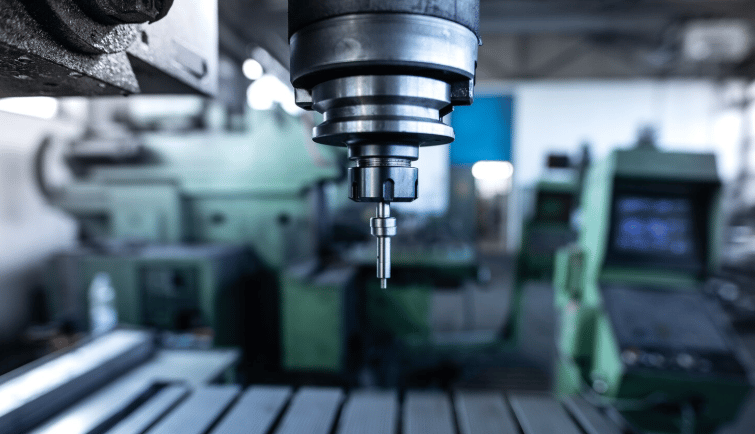
محتوى مشاركتيIn today’s global industrial era, especially in fast-growing markets like Dubai and the Middle East (MENA), precision and quality are the foundations of business success. The goal of TECH-LAND is not just to provide machining services but to solve complex engineering challenges. This detailed guide analyzes every technical aspect of CNC machining, following global standards like those of 'Astro Machine Works'.
What Is CNC Machining?
CNC machining (Computer Numerical Control) is an advanced manufacturing process that uses computer software to control the movement of machinery and tools. This technology is different from traditional manual machining, where an operator had to guide cutting tools using wheels, levers, and buttons.
Simply put, CNC machining is the process of turning a digital design into a physical object. It works on the principle of 'Subtractive Manufacturing.' This means starting with a solid block of material (called a workpiece) and removing material using computer-guided tools until the final desired shape is achieved. This technology is so accurate that it provides micron-level precision far beyond human capability.
Key Steps in the CNC Machining Process
To create a high-quality industrial part, CNC machining follows a systematic and scientific process. The four main steps are:
a. Designing the CAD Model
The process begins with creating a 2D or 3D 'Computer-Aided Design' (CAD) file. In this stage, engineers define the exact dimensions, geometry, and technical specifications of the part. The most important factor here is ensuring the design is 'machineable.'
b. Converting CAD File to CNC Program
Once the design is ready, the CAD file is put into 'Computer-Aided Manufacturing' (CAM) software. This software analyzes the geometry and converts it into G-code and M-code. G-code tells the machine where and how to move the tool, while M-code controls auxiliary functions like turning coolant on/off or changing tools.
c. Machine Setup
Before machining starts, the operator prepares the machine. This involves securing the workpiece in a proper holding device (like a vise or fixture) and installing the required tools in the tool holder. A precise setup ensures the accuracy of the final product.
d. Execution of the Machining Operation
When everything is ready, the operator starts the program. The CNC machine then follows the software instructions perfectly. It cuts, drills, or shapes the workpiece. During this time, the operator monitors the process to ensure everything runs smoothly.
Main Types of CNC Machining Operations
Different industrial applications require different machining techniques. Three types of operations are most common:
CNC Milling: This uses rotating multi-point cutting tools. This process is best for creating parts with complex shapes and flat surfaces.
CNC Turning: Here, the workpiece itself rotates while a stationary cutting tool shapes it. This makes it highly suitable for manufacturing circular and cylindrical components.
CNC Drilling: This process is used to make precise holes in a workpiece, which are often needed for bolting or assembly.
Material-Specific Expertise
Different industries require different materials based on their specific needs. TECH-LAND is known for its expertise in machining all of the following materials:
a. CNC machining aluminum
Aluminum is the first choice for the aerospace and automotive industries because it is lightweight, strong, and has high thermal conductivity. During CNC machining aluminum, high-speed machining (HSM) techniques are used. Since aluminum is soft, there is a risk of material sticking to the tool. Advanced cooling systems and specific tool coatings ensure an excellent surface finish without defects.
b. stainless steel machining
Stainless steel (especially grades 304 and 316) is essential for the oil and gas sector due to its rust-resistant properties. stainless steel machining is challenging because the material is hard and tends to 'work harden' during the process. High-torque machines and specially designed carbide tools are used to maintain accuracy even in the toughest conditions.
c. plastic CNC machining
Today, advanced plastics are being used instead of metals in many medical and electronic devices. plastic CNC machining (for materials like PEEK, POM, or Nylon) must be done very carefully so that the plastic does not melt or warp due to heat. Precise feed rates and special cutting angles are used to achieve metal-like accuracy in plastic parts.
d. titanium machining
Titanium is one of the hardest and most challenging materials in the world. Because of its low thermal conductivity, heat generated during cutting stays concentrated on the tool. titanium machining requires deep technical knowledge and high-pressure coolant systems. The ability to create complex titanium parts for aerospace and medical implants is available here.
CNC Machining Key Advantages
The benefits of adopting CNC technology in industrial manufacturing are endless:
a. High Accuracy and Precision
Unlike human-operated machines, CNC machines can work without fatigue at micron-level tolerances. This accuracy is a lifesaver for complex mechanical systems.
b. Creation of Complex Geometries
Some shapes are nearly impossible to make with traditional methods. But with 5-Axis CNC machines, complex designs can be created in a single setup, reducing production time and cost.
c. Consistency in Production
If 5,000 parts of the same design are needed, the first part and the 5,000th part will be exactly the same. This 'Repeatability' is the biggest strength of CNC machining.
d. Waste Minimization
According to industry leaders like 'Astro Machine Works' and 'JLC CNC', CNC machining optimizes material use. The use of precise toolpaths and nesting software minimizes raw material waste, which is good for both the environment and the budget.
TECH-LAND: A Reliable Engineering Partner
Located in the heart of Dubai, TECH-LAND is not just a service center but a solution for every engineering problem. It is clear that in industries like oil and gas, pumps, and valves, the lack of even a small spare part can stop an entire operation.
Whether it is the speed of CNC machining aluminum or the strength of stainless steel machining, the technical team is committed to providing modern CNC solutions. Services ranging from 3D scanning to reverse engineering are available here to create exact replacements for old or broken parts.
Future Challenges and CNC Solutions
As technology advances, difficult processes like titanium machining are becoming more accessible. In the future, AI and machine learning will make CNC machines even more autonomous and efficient. Staying ahead in adopting these new technologies ensures that customers receive the best engineering products.
In conclusion, CNC machining is the technology that has paved the way for turning imagination into reality. From the complexities of titanium machining to the precision of plastic CNC machining, this technology is ready for every challenge.
A partnership with TECH-LAND is not limited to manufacturing; it is a blend of engineering excellence and technical vision. The highest level of purity is ensured in every micro-component, leading to a qualitative increase in the reliability and efficiency of industrial operations.
For more information, please visit the official website: www.tech-land.ae
Contact
Get in touch with our team today.
Follow
Connect
+971504151020
Only on WhatsApp
© 2026. All rights reserved By MR PUMP MACHINERY TRADING L.L.C